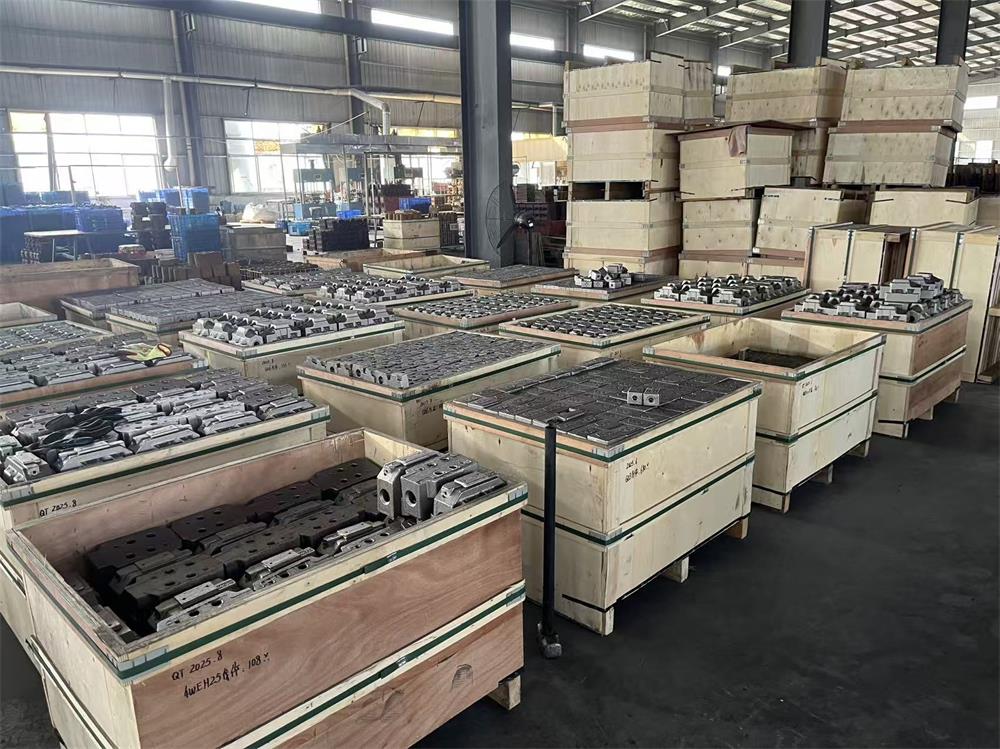
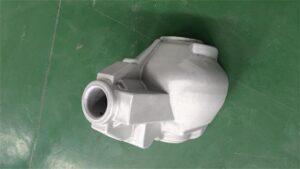
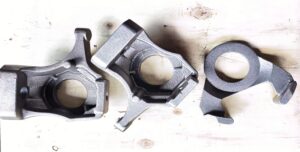
This project involved the development of custom tooling for an automotive metal component originally planned for production through vacuum-assisted lost foam casting.
The first trial used a white foam pattern. After evaluating the pattern and casting results, the tooling structure was modified to improve the foam-pattern shape, dimensional control, and production feasibility.
Although the modified tooling was completed and further trials were carried out, the casting process did not achieve the required result at that stage. This project therefore provides a practical example of why tooling development and casting-process verification are important before repeat production.
What Was This Automotive Casting Project?
The customer required a custom metal automotive component based on the confirmed product design and application requirements.
The original manufacturing route involved producing a white foam pattern, placing the prepared pattern into dry sand, and using vacuum assistance during the moulding and casting process.
This type of process is commonly associated with lost foam casting, in which the foam pattern represents the required casting shape and is consumed when molten metal is poured into the mould.
For a broader introduction to the process, materials, suitable component sizes, and production considerations, visit our vacuum moulding and lost foam casting process page.
Initial White Foam Pattern Trial
The project initially used a white foam pattern corresponding to the shape of the automotive component.
Before casting, the foam pattern needed to be checked for:
- Overall shape and structural completeness
- Critical dimensions
- Wall-thickness distribution
- Pattern deformation
- Assembly position
- Machining allowance
- Suitability for coating and sand filling
The initial pattern and casting trials showed that further tooling adjustments were necessary before the planned production route could be considered stable.
Modified Metal Mold for Foam Pattern Production
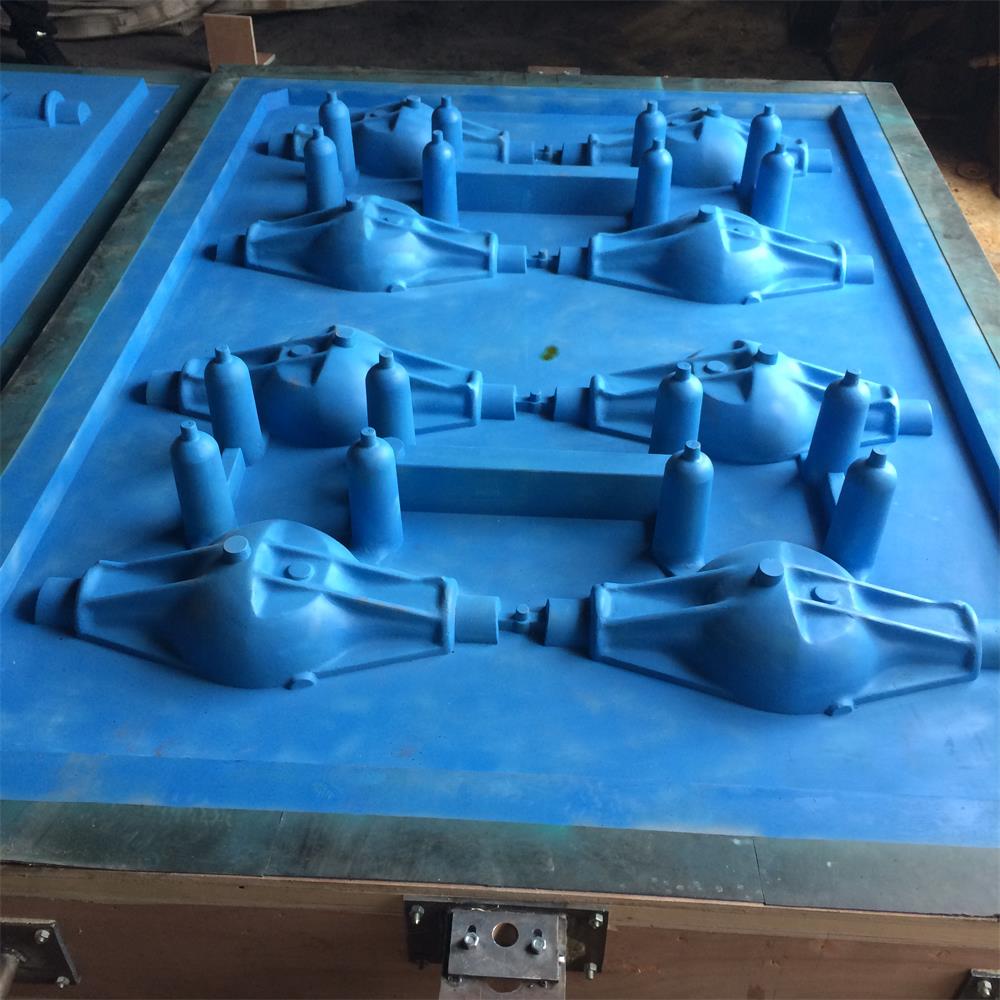
Following the first trial, the tooling was modified to improve the shape and consistency of the foam pattern.
The modified metal mold shown below contains the detailed cavities, bosses, mounting features, and structural contours required to form the automotive foam pattern.
The tooling modification considered factors such as:
- Part geometry and local structural details
- Pattern-forming feasibility
- Shrinkage allowance
- Critical dimensional positions
- Pattern removal and handling
- Gating and feeding requirements
- Subsequent machining allowance
Developing this type of tooling is not simply a matter of copying the final component shape. The mold must also account for the behaviour of the foam pattern and the requirements of the complete casting process.
Vacuum-Assisted Lost Foam Casting Process
For this project, the planned manufacturing route involved the following main stages:
- Reviewing the customer’s component design and technical requirements
- Developing the metal tooling used to produce the foam pattern
- Producing and inspecting the white foam pattern
- Applying a suitable refractory coating to the pattern
- Drying the coated pattern under controlled conditions
- Placing the pattern into dry sand
- Filling and compacting the sand around the pattern
- Applying vacuum assistance according to the moulding process
- Pouring molten metal into the prepared mould
- Removing the casting, gating system, and residual material
- Carrying out cleaning, machining, and inspection as required
The final process parameters depend on the metal grade, casting structure, foam-pattern quality, coating, sand system, vacuum control, gating design, pouring conditions, and required inspection scope.
Why Was the Tooling Modified?
Custom casting projects often require tooling adjustments after the first pattern or casting trial.
For this automotive component, the mold was modified after reviewing the initial trial results. Possible adjustment areas included pattern shape, shrinkage compensation, dimensional positions, local wall sections, machining allowance, and overall casting feasibility.
The modified tooling was intended to improve the consistency of the foam pattern and provide a better basis for the next casting trial.
However, tooling modification alone does not guarantee a successful casting. Lost foam casting quality is affected by the complete production system, including the pattern, coating, sand filling, vacuum conditions, gating, pouring, alloy behaviour, and process control.
Challenges During the Casting Trial
Despite modifying the tooling and continuing the development work, the vacuum-assisted lost foam casting route did not achieve the required project result at that stage.
This experience demonstrates that a casting process that appears suitable in principle may still require substantial testing before it can meet the customer’s dimensional, structural, surface, or production requirements.
Important factors that may affect a trial include:
- Foam-pattern density and dimensional stability
- Pattern deformation during handling or coating
- Coating thickness and drying condition
- Sand filling and vibration parameters
- Vacuum stability
- Gating and metal-flow design
- Pouring temperature and speed
- Gas evacuation during pattern decomposition
- Casting shrinkage and local deformation
- Final machining and inspection requirements
For this reason, sample development and process validation are particularly important for complex automotive castings.
When Is Lost Foam Casting Considered?
Vacuum-assisted lost foam casting may be considered for suitable metal components with:
- Integrated or complex external shapes
- Structures that would otherwise require multiple mould sections or cores
- Medium-to-large casting dimensions
- Cast iron or cast steel material requirements
- Low-to-medium production quantities
- A need to reduce conventional parting-line restrictions
However, process selection should not be based only on component appearance. The material, dimensions, annual quantity, tolerance, machining scope, mechanical requirements, tooling cost, and foundry conditions must all be reviewed together.
Choosing a Suitable Casting Process
Lost foam casting is only one possible route for manufacturing a custom metal component.
Depending on the part design and technical requirements, other processes such as sand casting, shell mould casting, investment casting, gravity casting, die casting, forging, or machining may be more appropriate.
To compare different options for metal, plastic, and rubber components, explore our custom manufacturing processes.
For OEM projects involving castings, machined components, fasteners, rubber parts, plastic parts, and related assemblies, visit our custom industrial parts manufacturing capabilities.
What We Learned from This Tooling Project
This automotive project did not proceed directly from tooling completion to stable repeat production. Nevertheless, the mold-development and casting trials provided valuable information about the component structure and process feasibility.
The project confirmed several important principles:
- Tooling design must be reviewed together with the casting process
- A successful foam pattern does not automatically guarantee a successful metal casting
- Initial trials may reveal dimensional or process risks that are not visible in the drawing
- Complex parts may require tooling modification and more than one casting trial
- The manufacturing route should be changed when trial results show that another process is more appropriate
Being willing to reassess the production route is often more responsible than continuing with a process that cannot reliably meet the project requirements.
Custom Casting Development Based on Drawings
YT Industrial supports custom casting and industrial component projects based on customer drawings, samples, material specifications, dimensions, and estimated quantities.
Our project review may include:
- Component structure and manufacturability review
- Material and process evaluation
- Tooling-development requirements
- Sample and trial-production planning
- Machining allowance and secondary operations
- Dimensional and material inspection requirements
- Packing and export-shipment arrangements
Because every custom component is different, the final manufacturing route should be confirmed only after reviewing the drawing, material, quantity, required tolerances, working conditions, and quality requirements.
Request a Review for Your Casting Project
Please send us your drawing or sample together with the metal grade, overall dimensions, estimated quantity, machining scope, heat-treatment requirements, surface-treatment requirements, and inspection standards.
Our team will review the component structure, tooling requirements, production feasibility, and suitable manufacturing process before preparing a quotation.
FAQ
Was this a plastic silicone mold vacuum casting project?
No. This was a metal casting development project involving a white foam pattern, modified metal tooling, dry sand, and vacuum-assisted lost foam casting trials.
What was the modified metal mold used for?
The modified metal mold was developed to form the white foam pattern used in the planned automotive lost foam casting process.
Did the modified tooling solve the casting problem?
The tooling was modified and further trials were carried out, but the process did not achieve the required result at that stage. The project therefore required further manufacturing-process evaluation.
Is vacuum moulding the same as lost foam casting?
They are related vacuum-assisted foundry processes but are not identical. Lost foam casting uses an expendable foam pattern that is consumed during pouring, while vacuum-process moulding normally uses plastic film, dry sand, and vacuum to form and maintain the mould cavity around a reusable pattern.
What information is required for a custom casting quotation?
Please provide the drawing or sample, metal grade, dimensions, estimated quantity, tolerance, machining scope, heat treatment, surface treatment, working conditions, and inspection requirements.