
Introduction
In industrial applications, choosing the right fastener is critical for performance, durability, and safety.
Two commonly used fasteners are shoulder bolts and hex bolts, but they serve very different purposes.
In this article, we explain the key differences between these two types of bolts and how to select the right one for your project.
In many cases, shoulder bolts are used together with components such as bearings and nuts to form complete assembly solutions for industrial equipment.
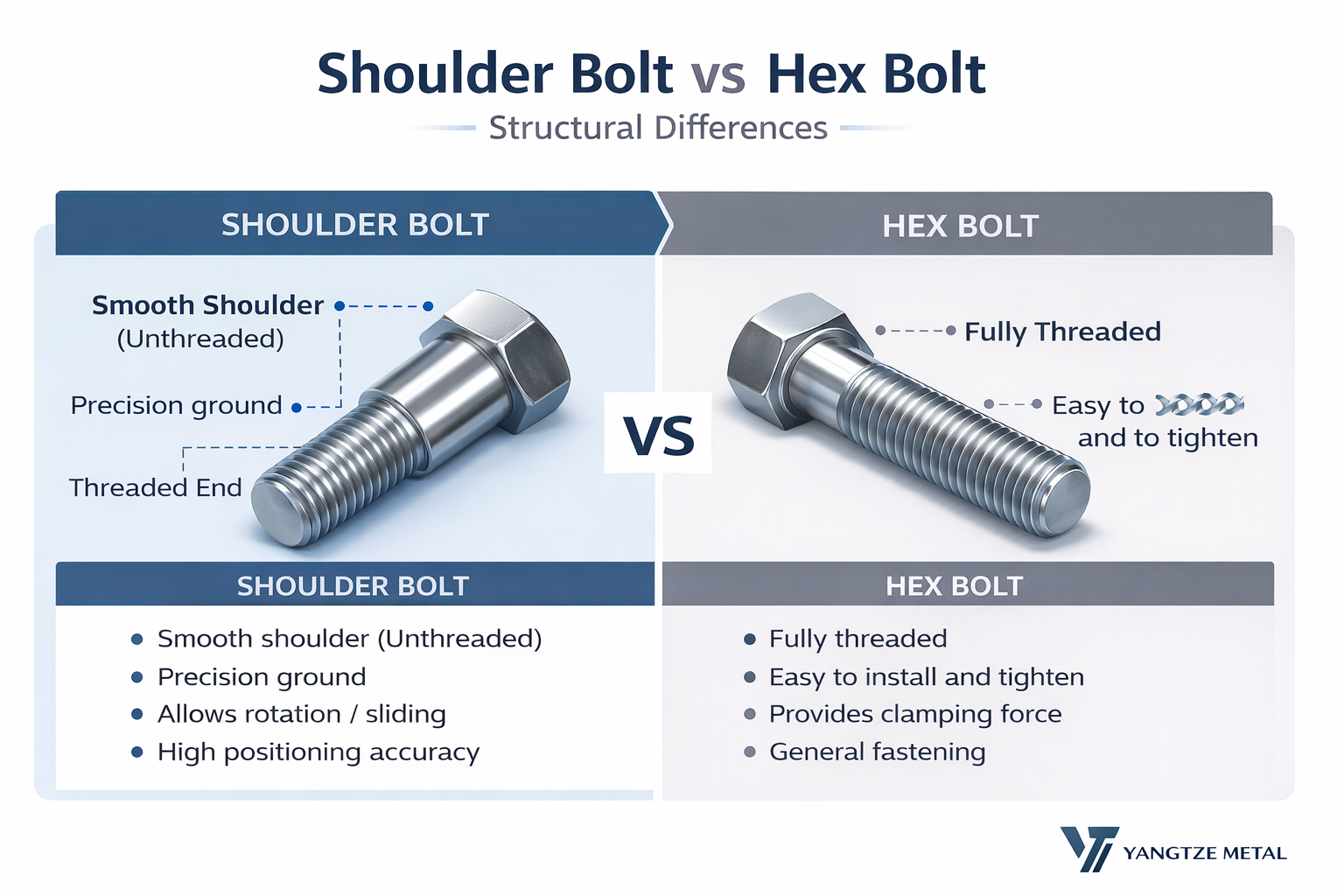
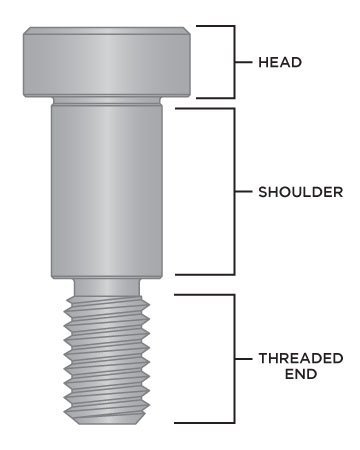
The following diagram clearly shows the structural differences between a shoulder bolt and a hex bolt.
What Is a Shoulder Bolt?
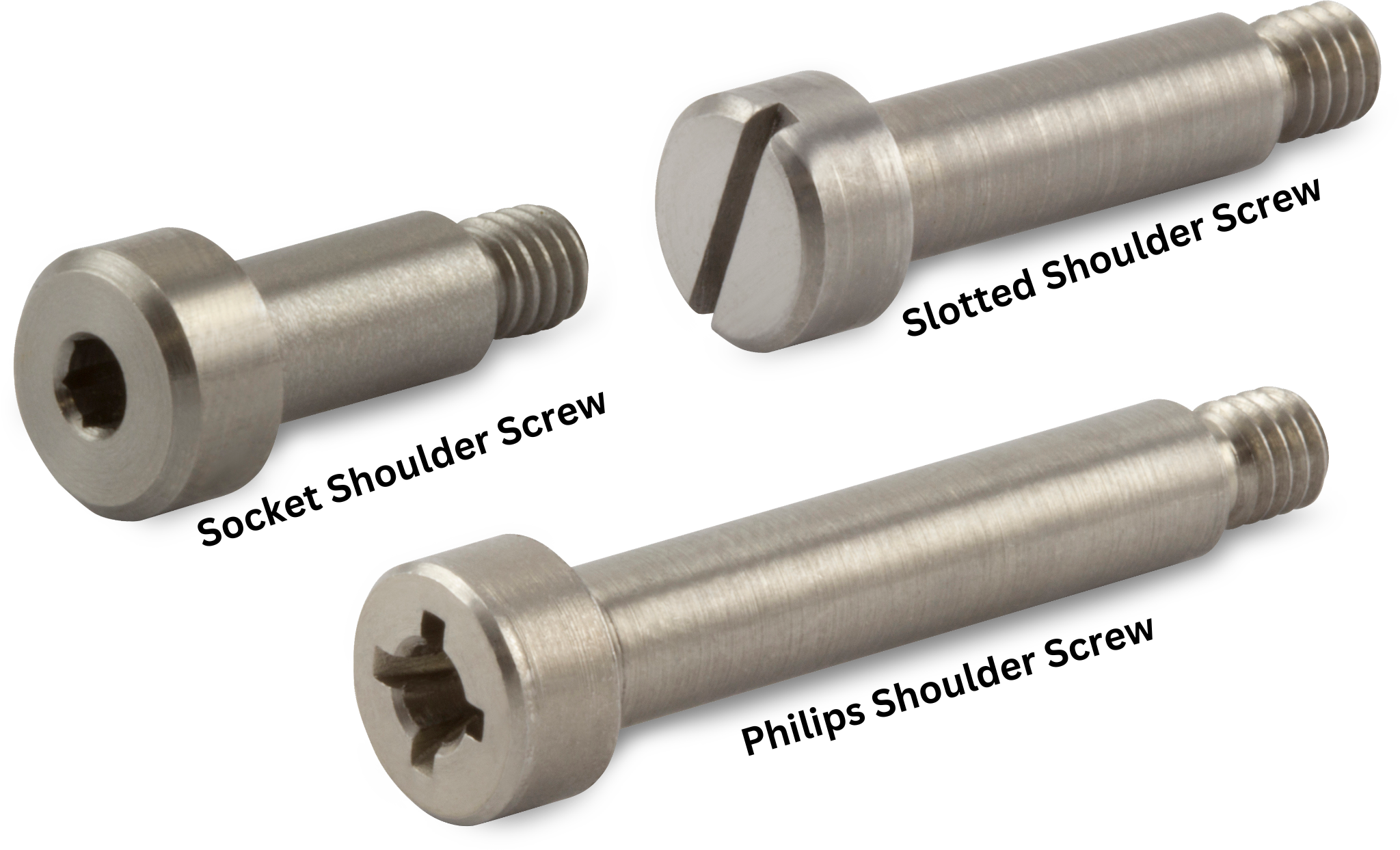
A shoulder bolt (also known as a shoulder screw or stripper bolt) features a smooth, unthreaded cylindrical section (shoulder) between the head and the threaded portion.
Key Features:
- Precision ground shoulder for accurate positioning
- Tight tolerances for rotation or sliding
- Thread only at the end
- Often used with bearings, bushings, or moving parts
Typical Applications:
- Mechanical assemblies
- Automotive components
- Mold and tooling systems
- Pivot and rotating mechanisms
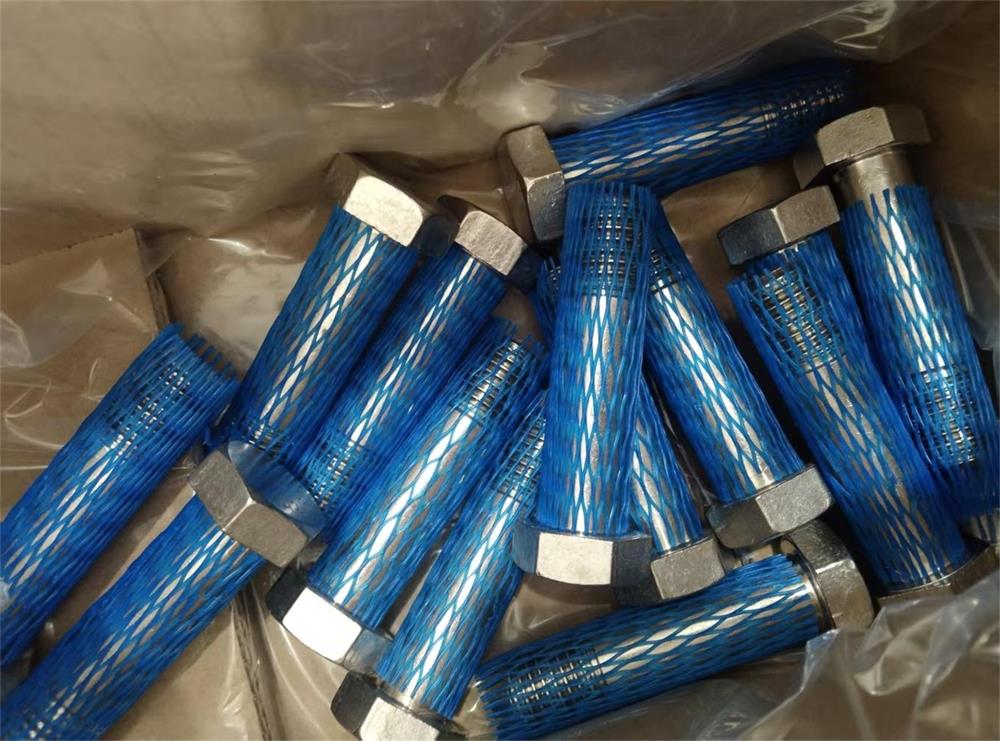
For example, in a recent industrial project, we supplied custom 3/4″ shoulder bolt assemblies with hex nuts and needle bearings, demonstrating how shoulder bolts are used in real mechanical systems.
What Is a Hex Bolt?
A hex bolt is a fastener with a hexagonal head and a fully or partially threaded shank, designed primarily to clamp two or more components together.
Key Features:
- Fully threaded or partially threaded
- Designed for clamping force
- Easy installation with standard tools
- Wide range of sizes and materials
Typical Applications:
- Structural connections
- Machinery assembly
- Construction and infrastructure
- General fastening
Key Differences Between Shoulder Bolts and Hex Bolts
The table below highlights the key structural and functional differences between shoulder bolts and hex bolts.
| Feature | Shoulder Bolt | Hex Bolt |
|---|---|---|
| Structure | Smooth shoulder + threaded end | Fully or partially threaded |
| Function | Positioning / rotation | Fastening / clamping |
| Precision | High | Standard |
| Applications | Moving parts, bearings | Fixed joints |
| Cost | Higher | Lower |
When Should You Use a Shoulder Bolt?
You should choose a shoulder bolt when:
- Precise alignment is required
- Parts need to rotate or slide
- Bearings or bushings are involved
- Wear resistance is important
Shoulder bolts are ideal for applications where mechanical motion and positioning accuracy are critical.
For example, in one of our recent projects, we supplied custom 3/4″ shoulder bolt assemblies with hex nuts and needle bearings for an industrial customer, demonstrating how shoulder bolts are used in real mechanical applications.
When Should You Use a Hex Bolt?
Hex bolts are suitable when:
- You need strong clamping force
- The connection is static (non-moving)
- Cost efficiency is important
- Standard fastening is sufficient
They are widely used in general engineering and construction.
Materials and Surface Treatment Options
Both shoulder bolts and hex bolts can be manufactured in a variety of materials:
- Carbon steel (e.g., Grade 8)
- Stainless steel (e.g., SS304, SS316)
- Alloy steel
Surface treatments may include:
- Zinc plating
- Black oxide
- Hot-dip galvanizing
Both shoulder bolts and hex bolts can be customized based on drawings for specific industrial applications.
Custom Manufacturing Capabilities
In many industrial projects, standard fasteners may not meet specific requirements.
Custom solutions can include:
- Special shoulder dimensions
- Tight tolerance machining
- Material customization
- Assembly supply (bolt + nut + bearing)
We manufacture custom shoulder bolts, hex bolts, shafts, pins, sleeves, washers, and related fastening components according to customer drawings, material specifications, dimensional tolerances, heat-treatment requirements, surface finishes, and assembly conditions.
For custom metal components requiring CNC machining, thread production, grinding, heat treatment, surface coating, dimensional inspection, and assembly verification, explore our custom precision metal parts manufacturing capabilities.
Conclusion
While both shoulder bolts and hex bolts are essential fasteners, they serve very different purposes.
Choosing the right one depends on whether your application requires movement and precision or simple fastening and strength.
Understanding these differences can help improve product performance and reduce long-term maintenance costs.
You can also explore our shoulder bolt assembly project to see how these components are manufactured and supplied in real industrial applications.
Looking for Custom Shoulder Bolts or Industrial Fasteners?
We provide custom manufacturing solutions for shoulder bolts, hex bolts, and other industrial metal components based on your drawings and application requirements.
You can also explore our shoulder bolt assembly project to see how these components are manufactured and supplied for industrial use.
Contact us today to discuss your project.