General
This was a new project for an automotive customer in Australia.
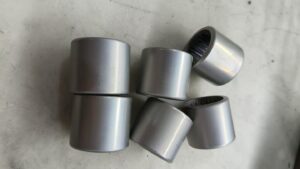
The component is a steering box mounting part. We supplied the water glass investment cast blanks with machining allowance, while the customer planned to complete the final machining before installation.
Custom Water Glass Investment Casting Parts
This project involves the manufacturing of custom metal components using the water glass investment casting process, also known as the lost wax casting method. This casting technique is widely used for producing metal parts with complex shapes and good dimensional accuracy.
The water glass casting process is a cost-effective solution for producing medium precision castings compared with silica sol casting. It is commonly applied to industrial components where reliable mechanical performance and economical production are required.
The cast parts are produced according to client drawings and specifications and can be further processed through machining, surface treatment, and assembly depending on project requirements.
Yutung Industrial provides customized investment casting solutions including both water glass casting and silica sol casting processes.
For custom carbon steel, stainless steel, and alloy steel components requiring water glass or silica sol casting, tooling development, machining allowance, dimensional inspection, and batch production, explore our custom investment casting parts manufacturing capabilities.
Picture


Material
The castings were manufactured from AISI 1025 carbon steel according to the customer’s confirmed material specification.
Quantity
The first production batch included 40 pieces. New tooling was developed for the project before sample and batch casting production.
Manufacturing Process
The steering box mount was manufactured through the water glass lost wax casting process. New tooling was developed first, followed by wax pattern production, shell building, metal pouring, casting cleaning, and dimensional inspection.
The castings were supplied with the required machining allowance because the customer planned to complete the final machining after delivery.
For cast components requiring machining allowance control, CNC turning, milling, drilling, bore machining, surface finishing, and dimensional inspection, explore our custom precision metal parts manufacturing capabilities.
Surface
The casting surface and machining allowance were controlled according to the customer’s drawing and the selected water glass investment casting process.
Compared with silica sol investment casting, water glass casting is generally selected for projects that prioritize economical production and can accept a comparatively rougher as-cast surface or additional machining.
The final surface roughness requirement for machined areas was confirmed according to the customer’s drawing and subsequent machining plan.
You could refer to the pictures in this link, most of the products here are made by silica sol precision investment foundry.
https://ytcasting.com/metal-casting-process/precision-investment-casting/
What is water glass precision investment casting?
Waterglass precision investment casting, also known as the water glass investment casting process, is a specific method used to create intricate and precise metal parts or components. It is a type of investment casting, also called lost wax casting, which has been utilized for centuries to produce complex metal shapes with high accuracy and surface finish.
Here’s an overview of the water glass precision investment casting process:
Pattern creation (mould fabrication)
The process begins with the creation of a wax pattern that replicates the desired shape of the final metal part. The pattern can be produced using various methods, such as injection molding or manual carving.
Assembly
Multiple wax patterns are attached to a central wax gating system to form a cluster of patterns. This cluster is known as a “tree” or “sprue.”
Shell building
The tree of wax patterns is then coated with a ceramic shell. The ceramic shell is typically built up in several layers. The first layer is usually fine ceramic particles mixed with water glass (sodium silicate), which acts as a binder. After the first layer dries, additional layers of ceramic slurry mixed with progressively coarser ceramic particles are applied. This creates a strong and refractory shell around the wax patterns.
Dewaxing
The entire assembly is then heated in an autoclave or furnace to melt and remove the wax from the ceramic shell. This process is called dewaxing, and it leaves behind a cavity in the shell, which will be filled with molten metal.
Preheating
Once the wax is removed, the ceramic shell is preheated to a specific temperature to prepare it for the pouring of molten metal.
Casting
Molten metal is poured into the preheated ceramic shell through the gating system. The metal fills the cavity left by the wax pattern, taking its shape.
Cooling and solidification
The filled ceramic shell, now containing the molten metal, is allowed to cool and solidify.
Shell removal
Once the metal has solidified, the ceramic shell is broken or removed to reveal the metal parts inside.
Finishing
The cast metal parts may require some post-processing, such as cutting off the gating system, removing any excess material, and surface finishing.
Overall, water glass precision investment casting is suitable for producing parts with complex geometries and fine details, making it a preferred method for applications in aerospace, automotive, medical, and various industrial sectors.
Water glass investment casting is suitable for producing steel components with relatively complex geometry at a competitive production cost. Final tolerance and surface requirements should be evaluated together with machining allowance and any required secondary processing.
However, it may be more time-consuming and expensive compared to other casting methods, which should be considered when selecting the appropriate manufacturing process for a specific project.
Another related project can be found here: Silica Sol Investment Casting Bar.
For a complete overview of casting technologies, read our Metal Casting Process Guide.