Custom Plastic Water Collection Pans
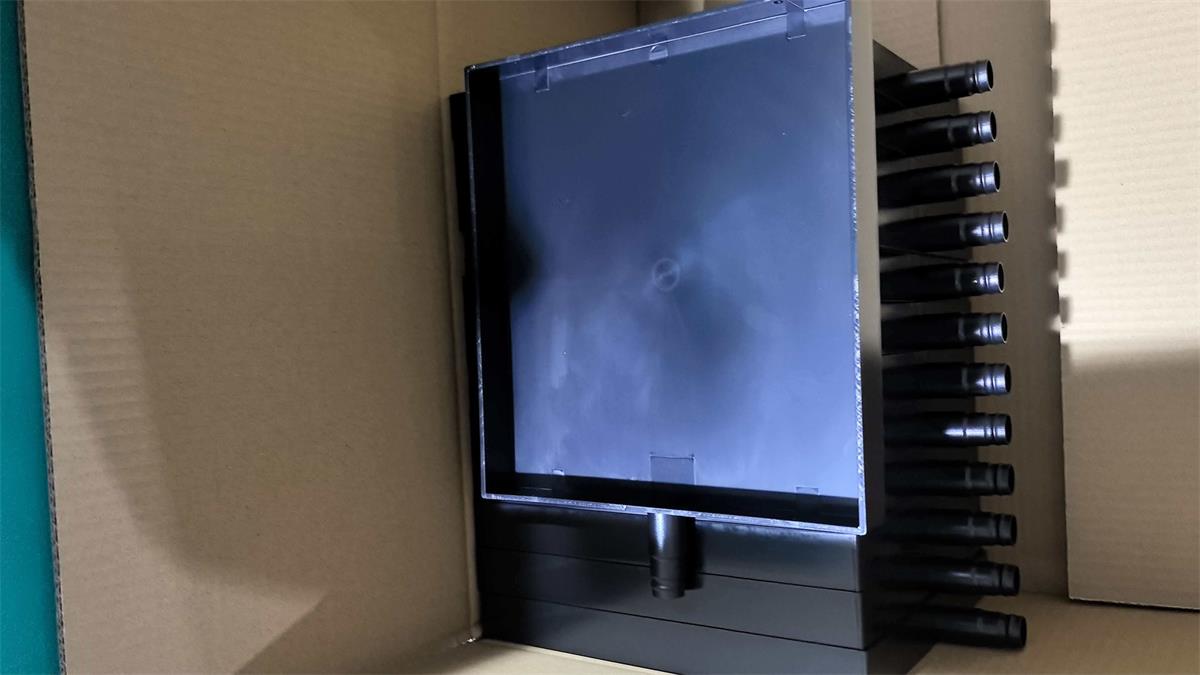
This project involves the manufacturing of custom plastic water collection pans supplied to an industrial client. These pans are designed to collect and contain water or liquid from equipment systems to prevent leakage and maintain a clean working environment.
The plastic pans are produced using durable materials that provide good corrosion resistance and long service life. Compared with metal containers, plastic pans offer advantages such as lightweight structure, chemical resistance, and ease of installation.
Water collection pans are widely used in industrial equipment systems, fluid management installations, and maintenance environments where liquid containment is required.
Yutung Industrial provides customized plastic manufacturing solutions for industrial containers, trays, and fluid management components according to client drawings and specifications.
For custom ABS, PP, PE, PA, PC, POM, and other thermoplastic components requiring mould development, drawing revisions, injection moulding, dimensional inspection, and high-volume production, explore our custom plastic injection moulding capabilities.
Drawing
The water pans were manufactured according to the customer’s approved drawings.
For this order, the customer retained the original product version while also introducing Version 4 for production. Both versions were arranged according to the confirmed drawings and order quantities.
Quantity
The total order quantity was 5,250 pieces, arranged for loading in one 20-foot container.
Picture


Material
The water collection pans were manufactured from ABS according to the customer’s confirmed material, colour, dimensional, and application requirements.
The selected ABS grade and injection moulding parameters were reviewed according to the product structure, wall thickness, gate location, demoulding requirements, and batch production needs.
What’s the material of ABS?
ABS, which stands for Acrylonitrile Butadiene Styrene, is a widely used thermoplastic polymer known for its toughness, durability, and versatility. It is one of the most common and popular engineering plastics due to its unique combination of properties. Here are some key characteristics and applications of ABS material:
Characteristics of ABS:
- Toughness: ABS is highly impact-resistant and can withstand significant mechanical stress without breaking.
- Rigidity: It offers good rigidity and dimensional stability, making it suitable for applications that require precise tolerances.
- Chemical resistance: ABS is resistant to many chemicals, oils, and acids, which enhances its usability in various environments.
- Electrical insulator: It is an effective electrical insulator, making it suitable for electrical and electronic applications.
- Thermal stability: ABS maintains its properties over a wide temperature range, allowing it to be used in both low and high-temperature applications.
- Surface finish: ABS can be easily sanded, painted, or glued, making it convenient for post-processing and assembly.
Applications of ABS:
- Automotive parts: ABS is used in various automotive components, including interior trim, dashboards, grilles, and exterior body parts due to its impact resistance and ease of processing.
- Consumer products: It is commonly found in everyday items like toys, cases for electronic devices, kitchen appliances, and luggage due to its toughness and aesthetic qualities.
- Pipes and fittings: ABS is used in plumbing systems as it can withstand the corrosive effects of various chemicals found in water and sewage.
- 3D printing: ABS is a popular material for 3D printing due to its mechanical properties and ease of printing.
- Protective gear: Helmets, protective pads, and other safety equipment often utilize ABS due to its impact resistance.
- Enclosures and housings: ABS is commonly used in the manufacturing of electronic enclosures and housing for electrical components due to its electrically insulating properties.
It’s important to note that while ABS offers many advantages, it is not suitable for all applications. For instance, it may not be ideal for certain high-temperature environments where other materials like polyamides (nylon) or polyphenylene sulfide (PPS) would be more appropriate. Additionally, ABS can be prone to warping during 3D printing if not properly managed, so some alternative materials may be preferred for specific 3D printing projects. As with any material selection, considering the specific requirements of your project and consulting with material experts can help ensure the best choice is made.
Process
Injection Moulding Process
The plastic water pans were manufactured by injection moulding according to the customer’s approved drawings and product versions.
Understanding the final application helps us review the material grade, product structure, wall thickness, gate position, mould design, dimensional tolerances, packing method, and other production details before batch manufacturing.
For OEM projects involving injection-moulded trays together with PVC profiles, rubber components, machined metal parts, fasteners, coatings, purchased hardware, or assembled industrial systems, explore our broader custom industrial parts manufacturing capabilities.
Related Injection Moulding Capability
See more details about our plastic injection moulding service.
See another plastic container project produced through a different manufacturing process: custom rotational moulded water tanks.