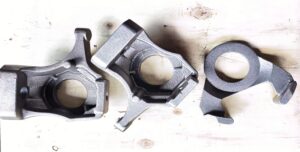

Introduction to Metal Casting
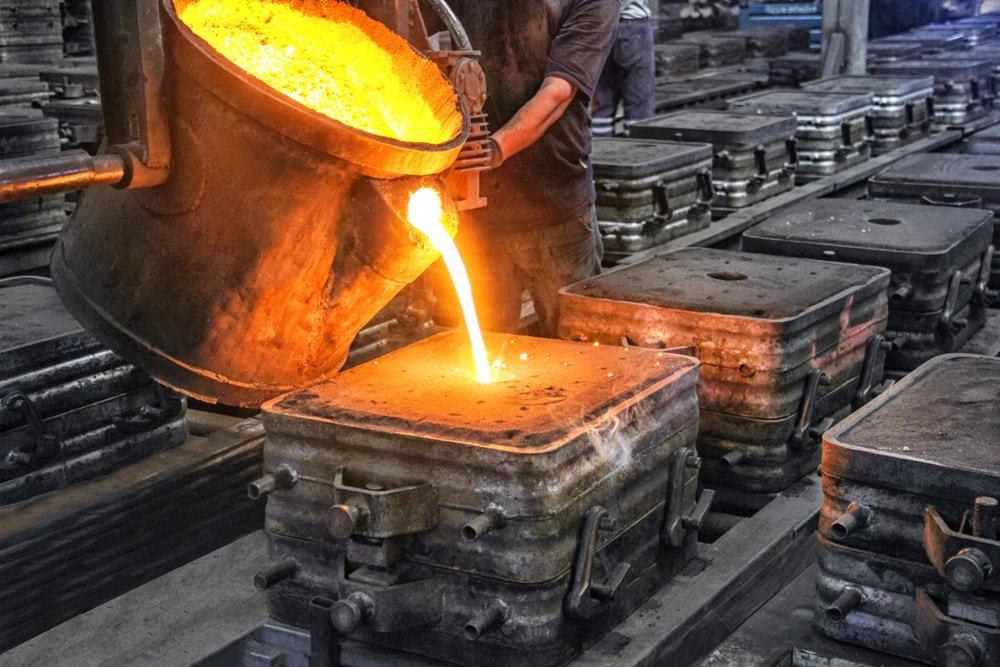
Metal casting is one of the oldest and most widely used manufacturing processes for producing metal components. In this process, molten metal is poured into a mold cavity where it solidifies and takes the shape of the mold.
Metal casting allows manufacturers to produce complex shapes, intricate geometries, and parts with varying wall thickness that would be difficult or expensive to manufacture using machining alone.
Today, metal casting is widely used in industries such as:
- Automotive manufacturing
- Oil and gas equipment
- Industrial machinery
- Construction equipment
- Marine components
Because of its flexibility and efficiency, casting remains one of the most important production methods in modern manufacturing.
What Is the Metal Casting Process?
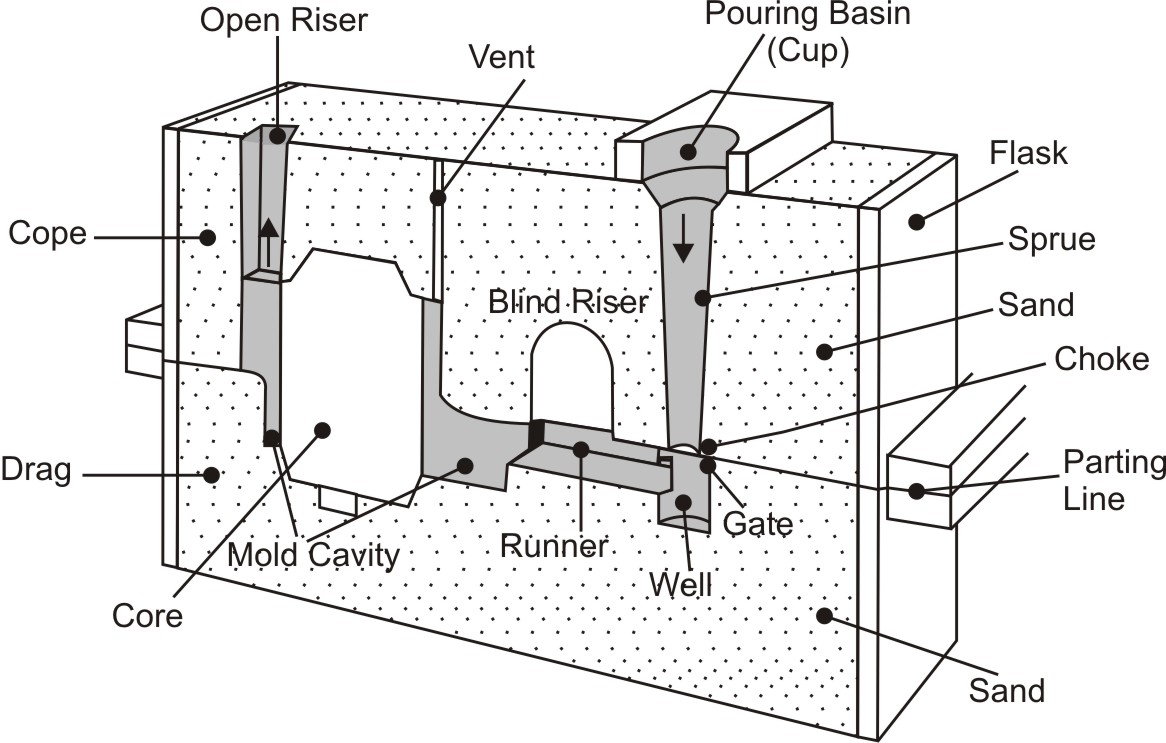
Metal casting is a manufacturing process in which molten metal is poured into a mold cavity and allowed to solidify into the desired shape. After cooling, the metal part is removed from the mold and finished through processes such as machining or surface treatment.
This method allows manufacturers to produce complex shapes, internal cavities, and large components that would be difficult or expensive to create using machining alone.
The metal casting process generally involves several key steps:
- Pattern design – creating a pattern that represents the final part
- Mold preparation – forming a cavity using sand, ceramic, or metal molds
- Melting the metal – heating the metal to a molten state
- Pouring – pouring the molten metal into the mold cavity
- Solidification – allowing the metal to cool and solidify
- Cleaning and finishing – removing excess material and finishing the part
These steps allow manufacturers to produce precise and repeatable metal components for industrial applications
After casting, additional processes such as machining, heat treatment, or surface finishing may be required to meet dimensional and functional requirements.
Reference article: How to Repair Stainless Steel Finish: Methods for Scratches and Surface Damage
Types of Metal Casting Processes
The most commonly used metal casting methods include investment casting, sand casting, die casting, and centrifugal casting.
There are many different casting processes used in modern manufacturing. Each method offers different advantages depending on the material, part geometry, and production volume.
Investment Casting
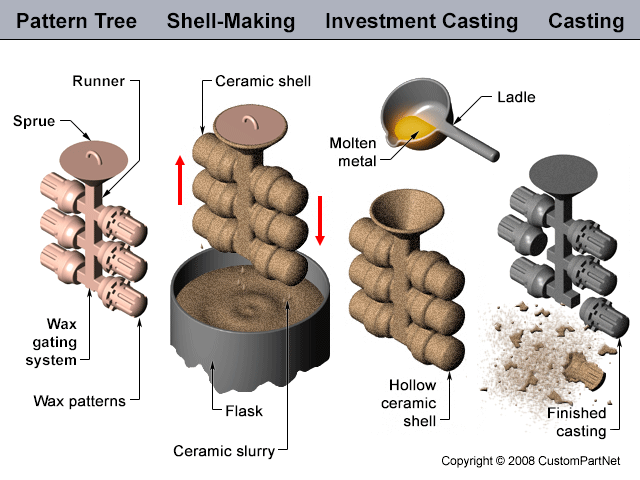
Investment casting, also known as lost wax casting, is a precision casting process used to produce complex metal parts with excellent surface finish and tight tolerances.
The process involves creating a wax pattern, coating it with ceramic material, melting out the wax, and pouring molten metal into the ceramic shell.
Investment casting is commonly used for:
- stainless steel components
- valve parts
- pump components
- aerospace parts
You can learn more about our investment casting services for high-precision metal components.
For custom stainless steel, carbon steel, alloy steel, and heat-resistant steel components requiring wax tooling, silica sol or water glass investment casting, dimensional inspection, CNC machining, and repeat production, explore our custom investment casting parts manufacturing capabilities.
For high-precision stainless steel parts, manufacturers often use silica sol investment casting
See one of our stainless steel casting projects for industrial components.
Sand Casting
Sand casting is one of the most traditional and versatile casting methods. In this process, molds are made using sand mixed with binding materials.
Sand casting is suitable for:
- large metal parts
- low to medium production volumes
- complex geometries
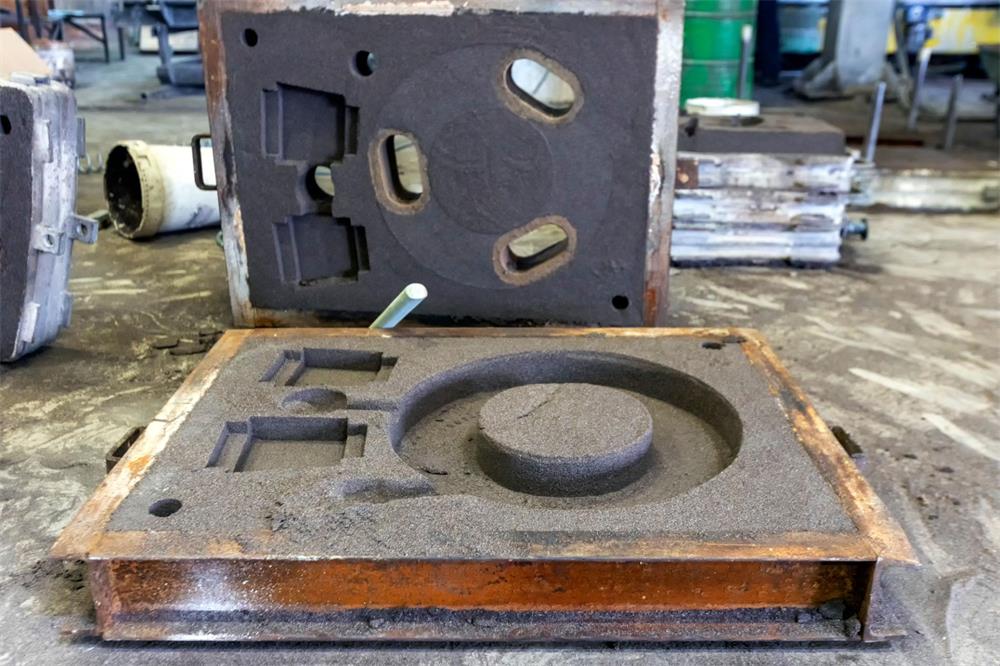
Common applications include:
- engine blocks
- machine bases
- pump housings
Die Casting
Die casting uses high pressure to inject molten metal into a metal mold. This process is typically used for non-ferrous metals such as aluminum and zinc.
Advantages of die casting include:
- high production speed
- excellent surface finish
- high dimensional accuracy
Die casting is commonly used for:
- automotive components
- electronic housings
- appliance parts
Centrifugal Casting
Centrifugal casting produces cylindrical parts by pouring molten metal into a rotating mold. The centrifugal force distributes the metal evenly against the mold wall.
This process is widely used for:
- pipes
- bushings
- rings
- sleeves
Centrifugal casting produces dense structures with fewer internal defects.
Comparison of Common Metal Casting Methods
| Casting Method | Best For | Typical Materials |
|---|---|---|
| Investment Casting | High-precision components with complex shapes | Stainless steel, carbon steel, alloy steel |
| Sand Casting | Large components and low-volume production | Cast iron, steel, aluminum |
| Die Casting | High-volume production of lightweight parts | Aluminum, zinc alloys |
| Centrifugal Casting | Cylindrical parts such as pipes, sleeves, and bushings | Steel, bronze, copper alloys |
Each casting method has unique advantages depending on part geometry, production volume, and material requirements.
Advantages of Metal Casting
Metal casting offers several important advantages compared with other manufacturing processes.
Ability to Produce Complex Shapes
Casting allows manufacturers to produce complex geometries that would be difficult or expensive to machine.
Wide Range of Materials
Casting can be used with many different metals, including:
Cost-Effective Production
Casting can reduce machining costs by producing parts close to their final shape. This is often referred to as near-net-shape manufacturing.
Suitable for Large Components
Large and heavy parts can be produced more easily through casting compared with machining or forming processes.
Metal Casting vs Machining
Both casting and machining are widely used manufacturing processes, but they serve different purposes.
| Feature | Metal Casting | Machining |
|---|---|---|
| Manufacturing Method | Molten metal poured into mold | Material removed by cutting |
| Part Complexity | Excellent for complex shapes | Best for precise finishing |
| Material Waste | Low | Higher |
| Production Cost | Lower for complex parts | Higher for large parts |
In many cases, casting and machining are combined to produce finished components.
After casting, surface finishing such as polishing may be required. You can read more about how to repair stainless steel finish.
Some sheet metal parts are produced using die stamping production methods instead of casting.
Applications of Metal Casting
Metal casting is used in a wide range of industries.
Automotive Industry
Casting is used to manufacture engine components, transmission housings, and structural parts.
Oil and Gas Industry
Casting is widely used for valves, pumps, and drilling equipment components.
Industrial Machinery
Many industrial machines rely on cast components such as housings, frames, and brackets.
Marine Equipment
Casting is also widely used for marine parts including propellers, pump housings, and structural components.
How to Choose the Right Casting Process
Selecting the appropriate casting process depends on several factors related to the product design and production requirements.
Manufacturers typically consider the following factors:
- Part complexity – intricate geometries often require investment casting
- Production volume – high-volume production may favor die casting
- Material type – certain alloys perform better with specific casting methods
- Dimensional tolerance – precision parts may require tighter control
- Cost considerations – tooling and production costs vary between processes
By evaluating these factors, manufacturers can choose the most efficient casting process for their specific applications.
For example:
- Investment casting is ideal for precision parts
- Sand casting is suitable for large components
- Die casting is best for high-volume aluminum parts
- Centrifugal casting is ideal for cylindrical components such as pipes, bushings, sleeves, and rings
Understanding these differences helps manufacturers select the most efficient production method.
Metal Casting vs Forging
Both metal casting and metal forging are widely used manufacturing processes for producing metal components, but they differ in how the material is formed.
In metal casting, molten metal is poured into a mold and allowed to solidify into the desired shape. This process is ideal for producing complex geometries and intricate parts.
Forging, on the other hand, involves shaping solid metal using compressive forces such as hammering or pressing. Forged parts often have excellent mechanical strength and durability.
Key Differences Between Casting and Forging
| Feature | Metal Casting | Metal Forging |
|---|---|---|
| Manufacturing Method | Molten metal poured into mold | Solid metal shaped by compressive force |
| Part Complexity | Excellent for complex shapes | Better for simpler shapes |
| Material Structure | May contain casting grain structure | Dense grain structure |
| Typical Applications | Valves, pumps, machinery parts | Automotive parts, tools |
In many industrial applications, manufacturers choose casting when complex shapes and cost efficiency are important, while forging is preferred when maximum mechanical strength is required.
FAQ About Metal Casting
What metals can be used in casting?
Common casting metals include aluminum, steel, stainless steel, brass, bronze, and cast iron.
Is casting cheaper than machining?
For complex parts, casting is often more cost-effective because it reduces the amount of machining required.
What industries use metal casting?
Metal casting is widely used in automotive, energy, construction, marine, and industrial equipment manufacturing.
Custom Metal Casting Solutions
At YT Casting, we provide custom metal casting solutions for a wide range of industrial applications. Our capabilities include:
- Precision investment casting
- Machining and finishing
- Custom industrial components
For OEM projects involving castings together with forging, CNC machining, heat treatment, surface finishing, fasteners, plastic or rubber components, and complete assemblies, explore our broader custom industrial parts manufacturing capabilities.
If you are looking for reliable manufacturing partners for custom metal parts, feel free to contact us for technical support or quotation.
👉 Learn more about our Investment Casting Service
https://ytcasting.com/service/investment-casting/