


At Yutung Industrial, we specialize in the manufacturing of high-quality EPDM extrusions tailored to meet the unique needs of our customers. Recently, we worked closely with a client to test and evaluate three EPDM samples with different hardness levels. This collaborative process ensures that the final product not only meets technical specifications but also delivers consistent performance in real-world applications.
What Is EPDM Extrusion?
EPDM (Ethylene Propylene Diene Monomer) is a synthetic rubber widely used for sealing, gasketing, and weatherproofing. The extrusion process shapes raw EPDM material into continuous profiles—such as strips, gaskets, or tubing—through a precision die. This allows for consistent cross-sections and excellent durability across industries, from automotive to construction.
The EPDM extrusion process is widely used to manufacture rubber sealing profiles for industrial and construction applications.
Applications of EPDM Extruded Profiles
EPDM extruded profiles are widely used in:
- Automotive sealing systems
- Construction window and door sealing
- Marine equipment sealing
- Industrial machinery protection
- Electrical insulation components
FAQ – EPDM Extrusion
What is EPDM extrusion used for?
EPDM extrusion is commonly used to produce rubber seals, weatherstrips, tubing, and industrial profiles that require excellent resistance to weather, ozone, and temperature.
Why is EPDM suitable for extrusion profiles?
EPDM rubber offers excellent elasticity, weather resistance, and UV stability, making it ideal for long-term outdoor sealing applications.
Can EPDM extrusion be customized?
Yes. EPDM extrusion profiles can be customized based on drawings or cross-section designs, allowing manufacturers to produce seals and profiles for specific industrial applications.
Why Hardness Matters?
One of the most critical factors in EPDM extrusion is hardness, typically measured in Shore A. Hardness determines the flexibility, compression set, and sealing performance of the final product.
- Softer EPDM (lower Shore A) provides greater flexibility and compressibility.
- Harder EPDM (higher Shore A) offers improved dimensional stability and wear resistance.
Testing Three Hardness Levels
For this project, we provided our customer with three EPDM samples at different hardness levels. Each sample was carefully extruded and tested for flexibility, resilience, and sealing capability.
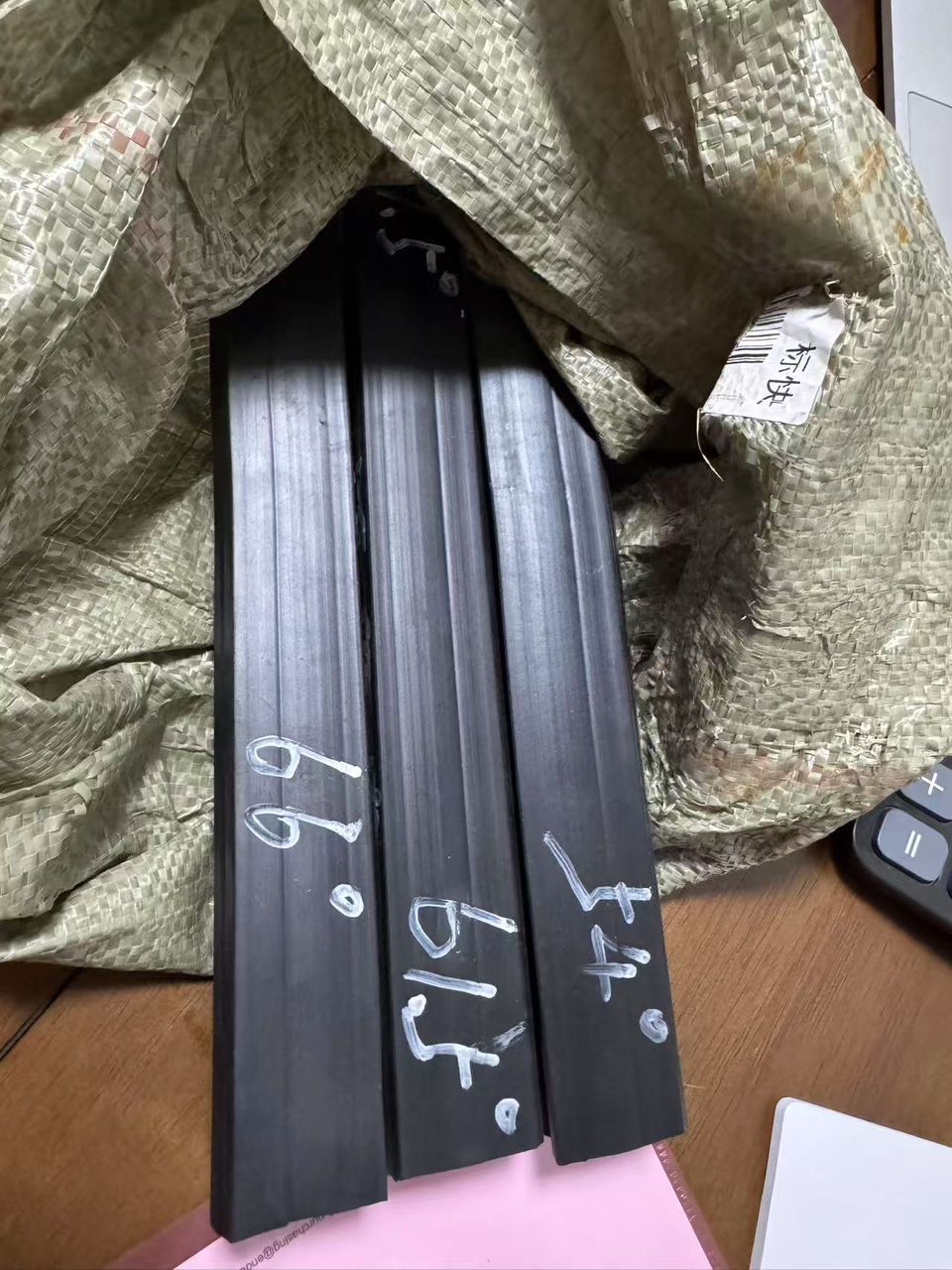
After review and comparison, the customer confirmed that the ideal hardness range for production is 56–60 Shore A. This balance ensures both durability and reliable sealing performance in their application.
Production and Packing Details
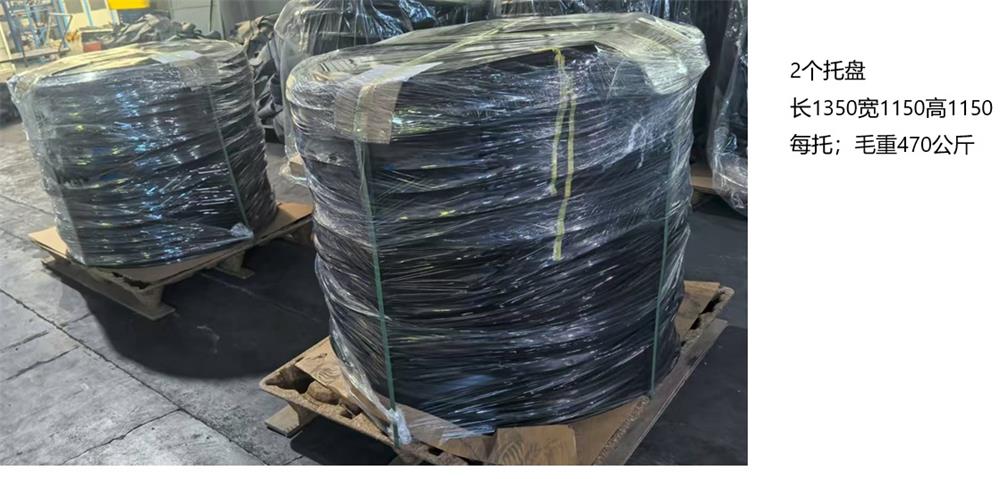
The order quantity was 1,200 m. The final shipment contained 11 rolls with a total length of 1,205 m:
- 55 m × 1 roll
- 70 m × 1 roll
- 120 m × 9 rolls
The goods were packed on two pallets, each measuring 1,350 × 1,150 × 1,150 mm and weighing approximately 470 kg gross.
Total shipment volume: 3.57 m³
Total gross weight: 940 kg
Production profiles were checked for hardness, cross-sectional dimensions, surface condition, and consistency with the approved sample. Other physical and ageing-related properties can be verified according to the customer’s specified test requirements.
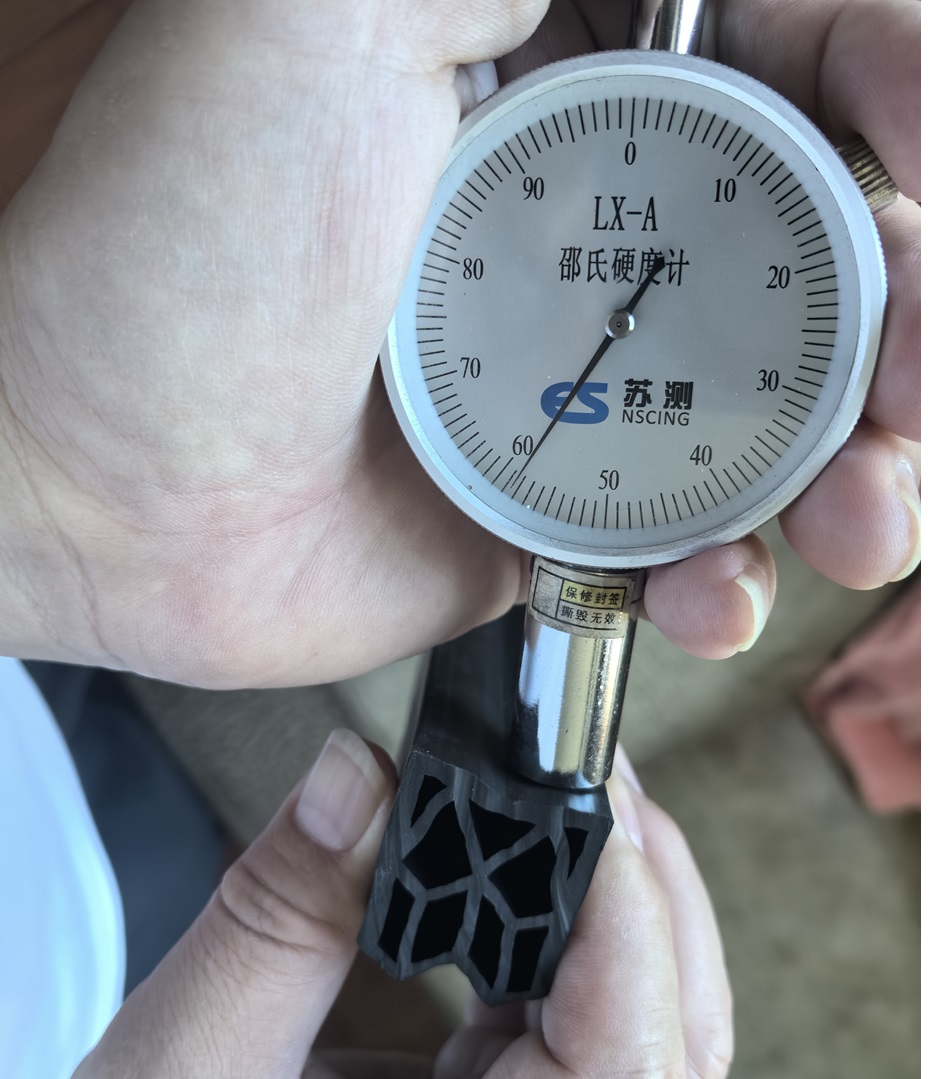
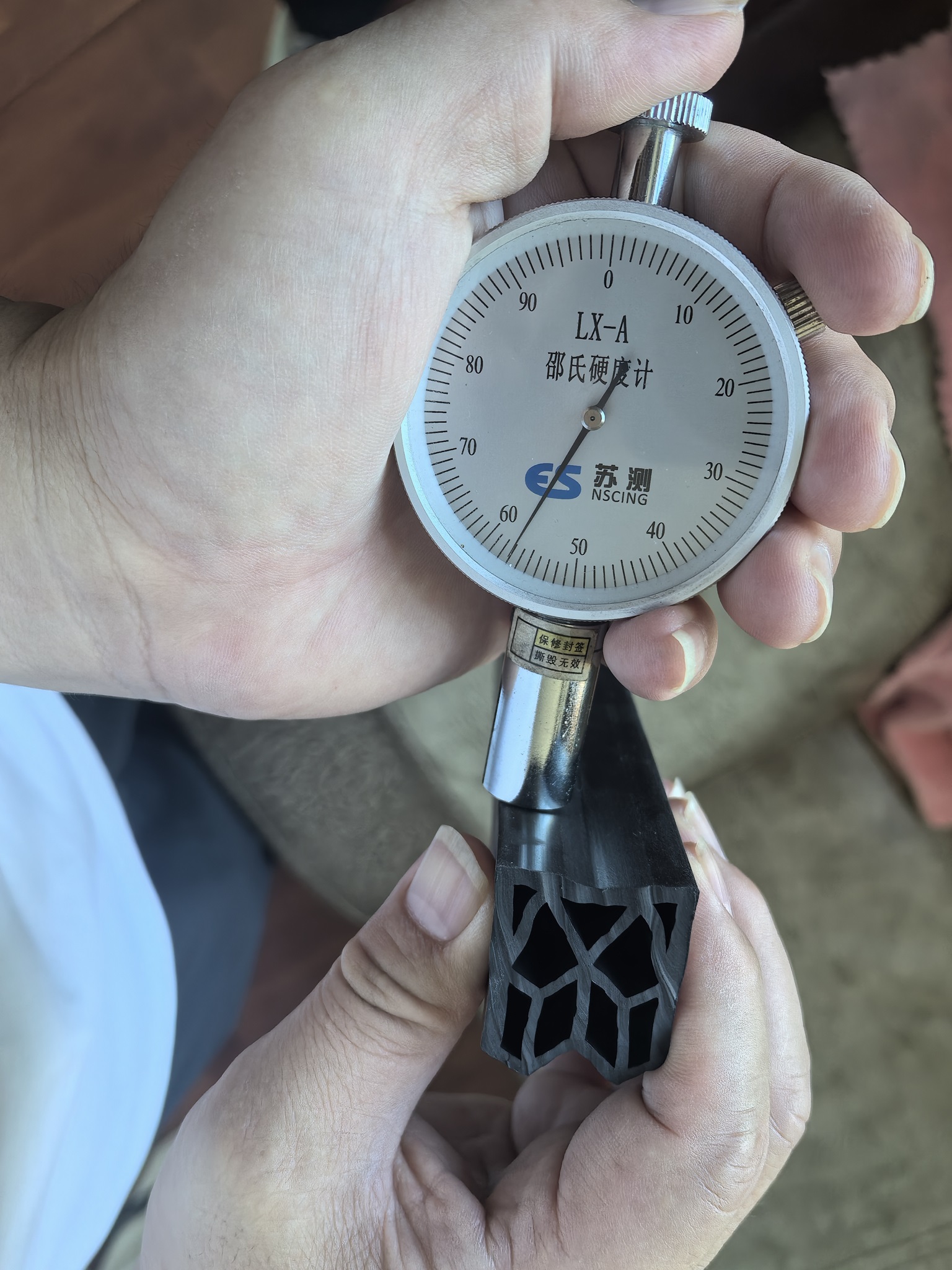
Test hardness
58.5 and 57.1 shore A
From Prototype to Production
After the customer confirmed the required hardness range, the EPDM profile moved from sample evaluation to batch production. Extrusion parameters and inspection requirements were controlled according to the approved sample and product specification.
For custom EPDM seals and profiles requiring extrusion die development, compound and hardness confirmation, cross-section control, vulcanization, cutting, inspection, and repeat production, explore our custom EPDM rubber extrusion profile manufacturing capabilities.
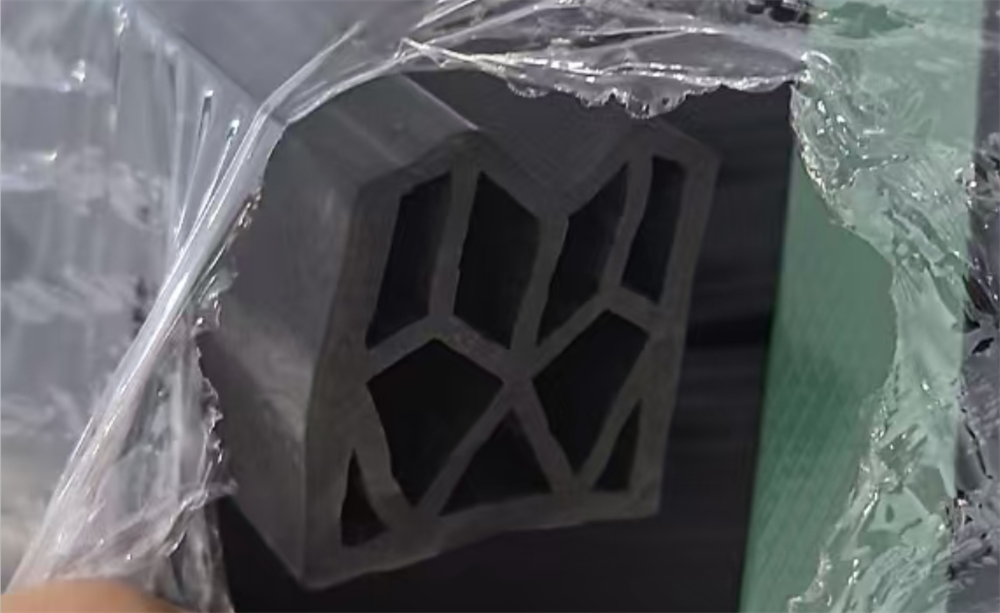
Each extrusion is tested not only for hardness but also for dimensional accuracy, surface quality, and long-term resistance to weather, heat, and compression.
Our Commitment to Quality
By combining technical expertise with open collaboration, we ensure that our customers receive the most suitable EPDM solutions for their projects. The extrusion process is not just about shaping rubber—it’s about delivering reliability, precision, and performance in every profile.
If you would like to learn more about our EPDM extrusion capabilities or request customized samples, feel free to contact us.
See our EPDM extrusion project here:


