
Introduction
Brass is widely used in architectural lighting products due to its excellent machinability, corrosion resistance, and attractive golden appearance. Many lighting manufacturers use brass components for both structural support and decorative design.
When manufacturing custom brass lighting components, two common production methods are centrifugal casting and CNC machining from solid brass bars. Each process has its advantages depending on the geometry, quantity, and surface requirements of the part.
In this article, we compare these two manufacturing methods and explain why CNC machining was ultimately selected for a recent custom lighting project.
What is Centrifugal Casting?
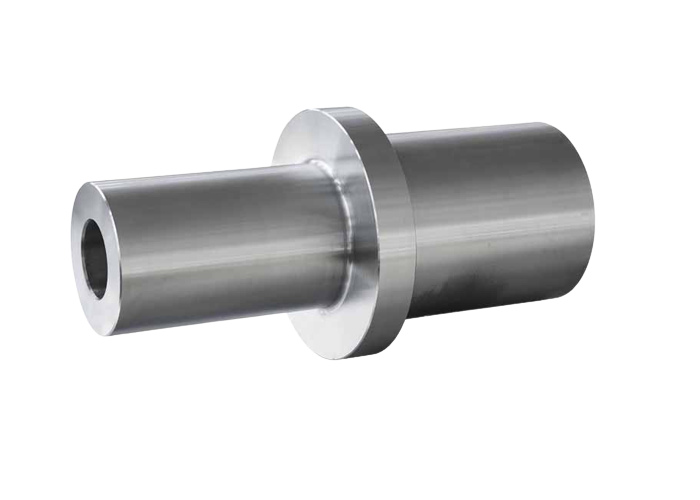
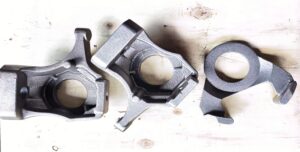
Centrifugal casting is a process where molten metal is poured into a rotating mold. The centrifugal force distributes the molten metal along the mold wall, forming dense cylindrical or rotational parts.
This process is commonly used for brass components such as:
- bushings
- rings
- sleeves
- cylindrical decorative parts
Advantages of Centrifugal Casting
- Good material density
- Lower material waste
- Cost effective for medium and large quantities
- Suitable for rotational symmetrical parts
However, centrifugal casting still requires secondary machining to achieve final dimensions and surface finishes.
For custom brass and bronze bushings, rings, sleeves, and other rotational components requiring alloy selection, centrifugal casting, rough machining, precision machining, dimensional inspection, and repeat production, explore our centrifugal cast bronze bushing manufacturing capabilities.
What is CNC Machining from Solid Brass?
CNC machining from solid brass bars involves using CNC turning and milling machines to remove material and produce the final shape directly from a solid metal bar.
This process provides high dimensional control and production flexibility, making it suitable for complex geometries and small production runs.
Advantages of CNC Machining
- High dimensional accuracy
- Flexible for complex shapes
- Suitable for small quantities and prototypes
- Excellent surface finish control
CNC machining is often preferred when the part contains detailed features or decorative surface designs.
For custom brass lighting components, decorative fittings, shafts, rings, sleeves, brackets, and other parts requiring CNC turning, milling, engraving, dimensional inspection, and surface-finish control, explore our custom precision metal parts manufacturing capabilities.
Real Project Example – Brass Lighting Components
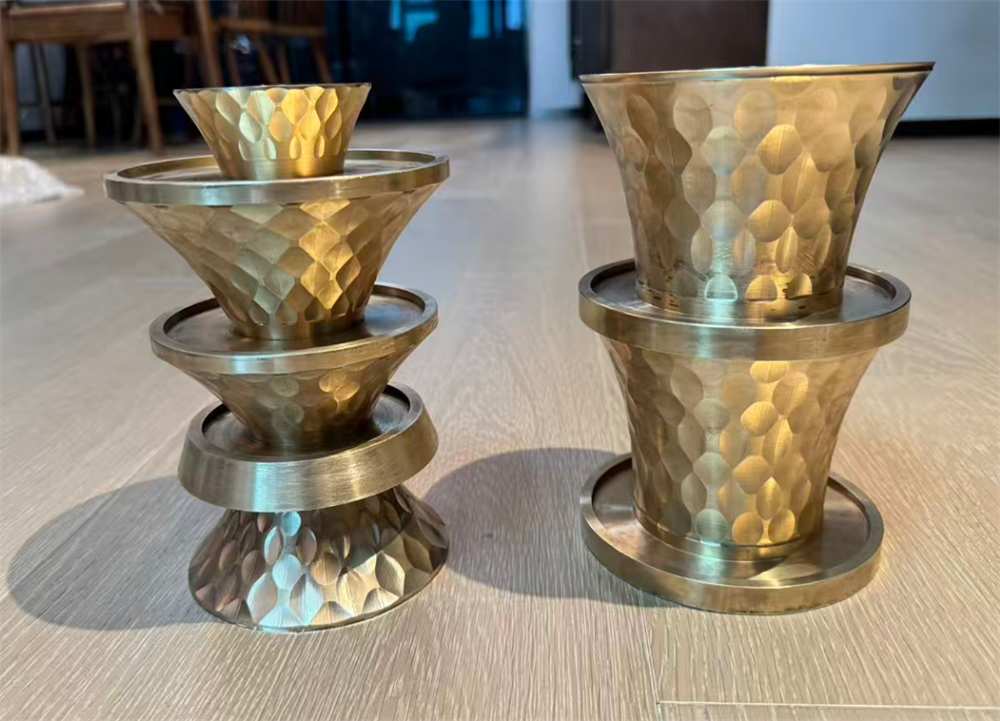
In a recent project for an Austrian lighting manufacturer, we produced two custom H59 brass lighting components.
The original design was planned for centrifugal casting because the parts had a rotational geometry.
However, during trial production we encountered an important challenge.
Due to the complex external shape and decorative surface areas, the cutting tools could not properly access certain sections during machining. This made post-machining extremely difficult.
To solve this problem, the manufacturing process was adjusted.
Instead of casting, the parts were machined directly from solid brass bars using CNC turning and milling.
After the main machining operations, the decorative hammer-like texture was precisely engraved on the surface using a special CNC machining process.
This approach allowed us to achieve both the required structural dimensions and the decorative appearance required for the lighting design.
When to Choose Centrifugal Casting
Centrifugal casting is generally the better choice when:
- the part is cylindrical or ring-shaped
- large production volumes are required
- the geometry is simple
- material efficiency is important
For many standard brass components, centrifugal casting remains an excellent manufacturing method.
When CNC Machining is the Better Option
CNC machining may be the better choice when:
- the geometry is complex
- decorative surfaces are required
- the order quantity is small or prototype
- very high precision is required
For architectural lighting products with aesthetic design requirements, CNC machining often provides better control of the final appearance.
Conclusion
Both centrifugal casting and CNC machining are effective manufacturing methods for brass lighting components. The best choice depends on the design complexity, quantity, and surface requirements of the product.
For decorative lighting parts with complex geometry, CNC machining from solid brass bars can offer greater flexibility and higher precision.
For a complete overview of casting technologies, read our Metal Casting Process Guide.
Related Project
Custom H59 Brass Lighting Components
https://ytcasting.com/project/custom-h59-brass-lighting-components/