Introduction
Powder metallurgy is a metal-forming process used to manufacture parts through powder compaction and sintering, often with good material utilization and dimensional control.
At YT Industrial, powder metallurgy may be considered as an alternative manufacturing route for suitable custom metal parts, depending on the product design, material, quantity, tolerance, and production requirements.
To compare powder metallurgy with casting, forging, stamping, machining, and other production methods, explore our custom manufacturing processes.
What Is Powder Metallurgy?
Powder metallurgy is a manufacturing process in which fine metal powders are compacted into a desired shape and then heated below their melting point to bond the particles together.
This process allows the production of complex shapes with good dimensional accuracy and reduced material waste.
Powder Metallurgy Process Steps
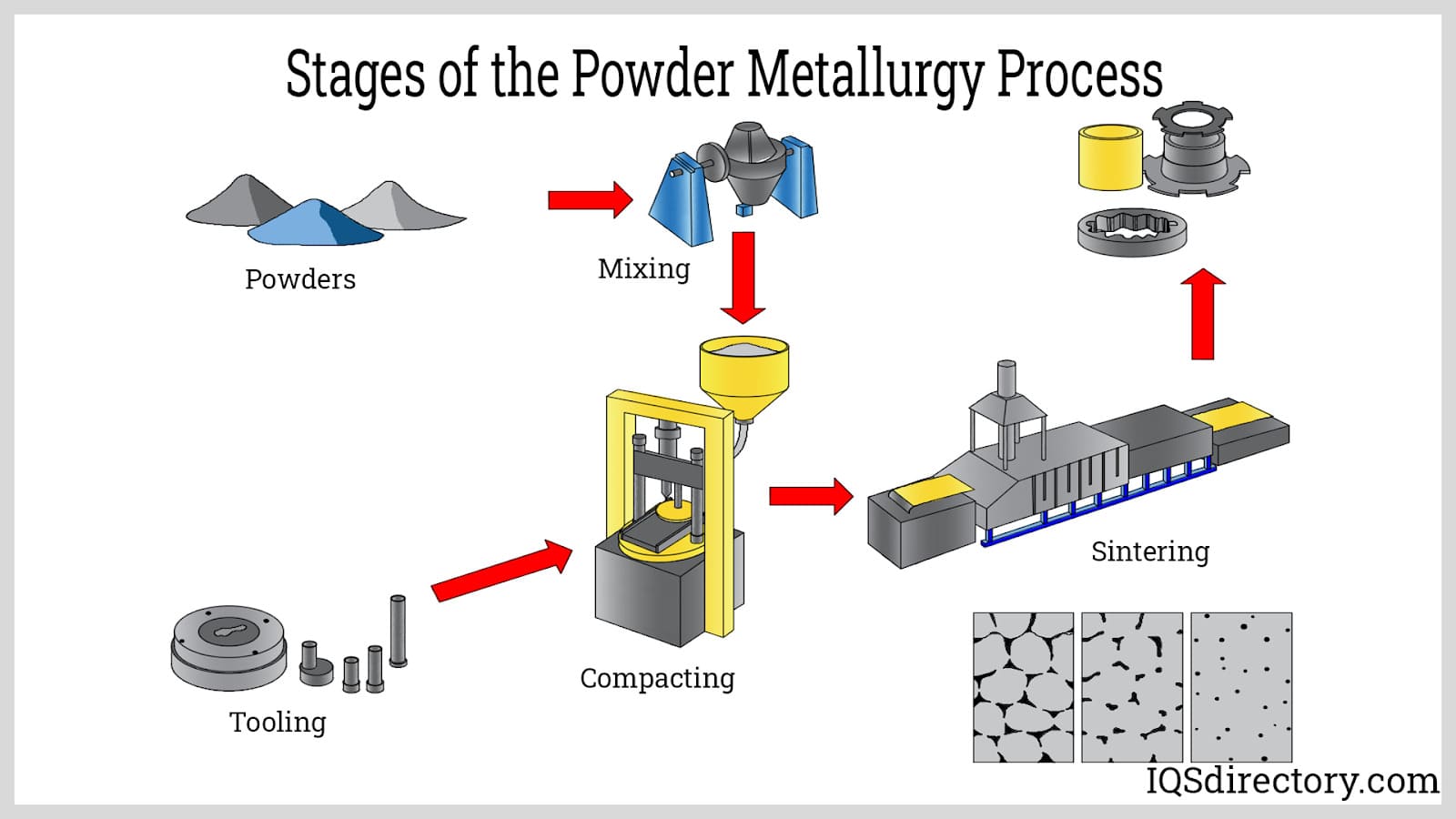
The typical powder metallurgy process includes:
- powder production (atomization or crushing)
- powder mixing and blending
- die compaction to form a “green part”
- sintering in a controlled atmosphere
- secondary processing such as machining or heat treatment
The final product can achieve near-net shape, reducing the need for additional machining.
Advantages of Powder Metallurgy
Powder metallurgy offers several advantages compared to traditional casting or machining:
- high material utilization (low waste)
- suitable for complex shapes
- good dimensional control
- reduced machining requirements
- Can be economical for suitable medium-to-high-volume production after tooling investment
These characteristics make powder metallurgy suitable for selected automotive, machinery, tool, bearing, and mechanical-component applications.
Applications of Powder Metallurgy Parts
Powder metallurgy parts are commonly used in:
- automotive transmission components
- gears and bearings
- industrial machinery
- tools and wear-resistant parts
- hydraulic and mechanical components
Powder Metallurgy vs Casting
Powder metallurgy and casting are both widely used metal forming processes, but they differ significantly.
Casting forms parts by pouring molten metal into molds, while powder metallurgy produces parts through compaction and sintering below the melting point.
Powder metallurgy is often considered for suitable small-to-medium components with repeat quantities, controlled geometry, and material-utilization requirements. Casting may be more suitable for larger components, broader material options, lower production quantities, or structures that cannot be compacted effectively in a powder-metallurgy die.
The final choice should consider part geometry, pressing direction, density requirements, alloy, mechanical properties, tooling cost, annual quantity, machining, and inspection requirements.
Our Manufacturing Capability
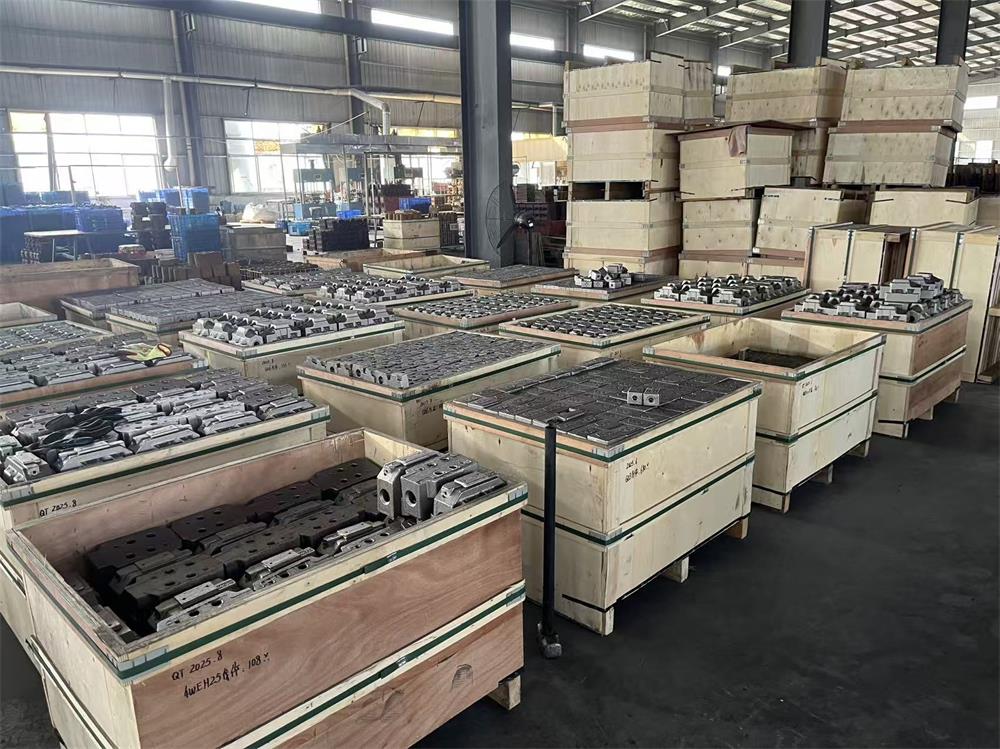
At YT Industrial, we provide multiple manufacturing solutions including casting, machining and forming processes.
Powder metallurgy can be considered as an alternative process depending on product structure, material and production quantity.
For OEM projects involving powder-metallurgy components together with castings, CNC-machined parts, stamped or forged components, fasteners, plastic or rubber parts, and related assemblies, explore our custom industrial parts manufacturing capabilities.
For comparison with molten-metal processes, learn more about our metal casting process options.
Need a Suitable Manufacturing Process for Your Metal Parts?
Send us your drawings or samples. Our engineering team will evaluate whether powder metallurgy, casting or machining is the best solution for your project.
Explore more powder metallurgy and sintered metal parts projects manufactured according to customer drawings and application requirements.
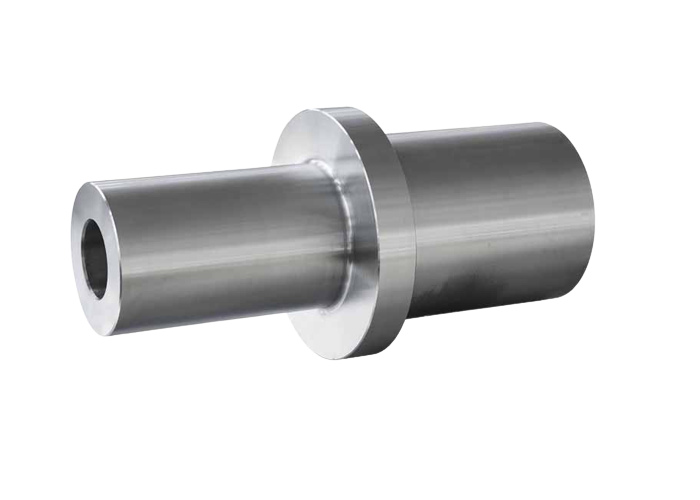
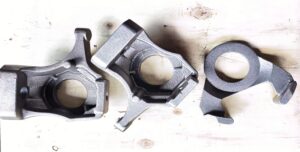
The following photo shows small metal components manufactured through a powder-metallurgy process. The final material, density, wall thickness, surface condition, and secondary operations depend on the approved drawing and technical requirements.